We assume the brain is a command centre, calmly analysing information and issuing instructions.
The reality is messier and far more interesting - your memories, emotions, bodily sensations and decision-making processes are constantly interacting.
Think of it as a conversation between three key players:
- The hippocampus, which helps you remember what happened.
- The amygdala, which decides how important, threatening or rewarding something feels.
- The prefrontal cortex, which weighs up consequences and helps you make thoughtful choices.
Most of the time these systems work together beautifully. But when we're stressed, tired, overwhelmed or emotionally activated, even just hungry, things change.
The emotional brain gets louder. The thinking brain gets quieter.
The Story Changes, Even Though the Facts Haven't
Mood and memory are deeply connected - when you're feeling low, your memories match your mood.
That’s because the brain is constantly asking:
"How do I make sense of what's happening right now?"
One way it does this is by retrieving memories that match your current emotional state.
When we're anxious, we notice threats. When we're discouraged, we remember setbacks. Bad moods make everything look harder.
When we're hopeful, possibilities seem easier to find.
Your Body is a Big Part of Your Mood
Your brain isn't just listening to your thoughts. It's listening to your body too.
When you slump in a chair, look down and collapse your shoulders, you're not simply expressing how you feel. You're also sending information back to the brain about how you're doing.
And, when you stand tall, lift your gaze and open your posture, the brain receives a different message.
It doesn't mean you can solve anxiety with better posture. It does mean that feelings and physical states influence each other more than we often realise.
A Tiny Experiment
The next time you're really not feeling it, try this:
Pause.
Plant both feet on the floor.
Lengthen your spine.
Drop your shoulders away from your ears.
Slow your breathing.
Then ask yourself: "What would the version of me five years from now hope I choose?"
Notice what changes. You haven’t magically become a different person. You have given your wiser, more reflective brain a better chance to join the discussion.
The Brain Doesn't Make Decisions Alone
We're often told that changing our lives requires dramatic action, but change starts much smaller.
- A walk around the block before responding.
- A few slower breaths before making a decision.
- Looking up instead of down.
- Standing instead of collapsing.
Creating enough space for the emotional brain and the thinking brain to work together rather than compete.
Our Minds and Bodies are Part of the Same System
Many of us spend years trying to logic our way into better habits, calmer emotions and wiser decisions.
But perhaps the answer isn't always more thinking.
Sometimes the quickest way to influence what's happening is through
- One small movement.
- One deeper breath.
- One moment of standing a little taller.
Ready to create the conditions for calmer thinking and wiser choices?
What small movement could you make today that your future self might thank you for?
If our thoughts, feelings and behaviours are influenced by what's happening in the body, perhaps one of the simplest places to start is by moving differently.
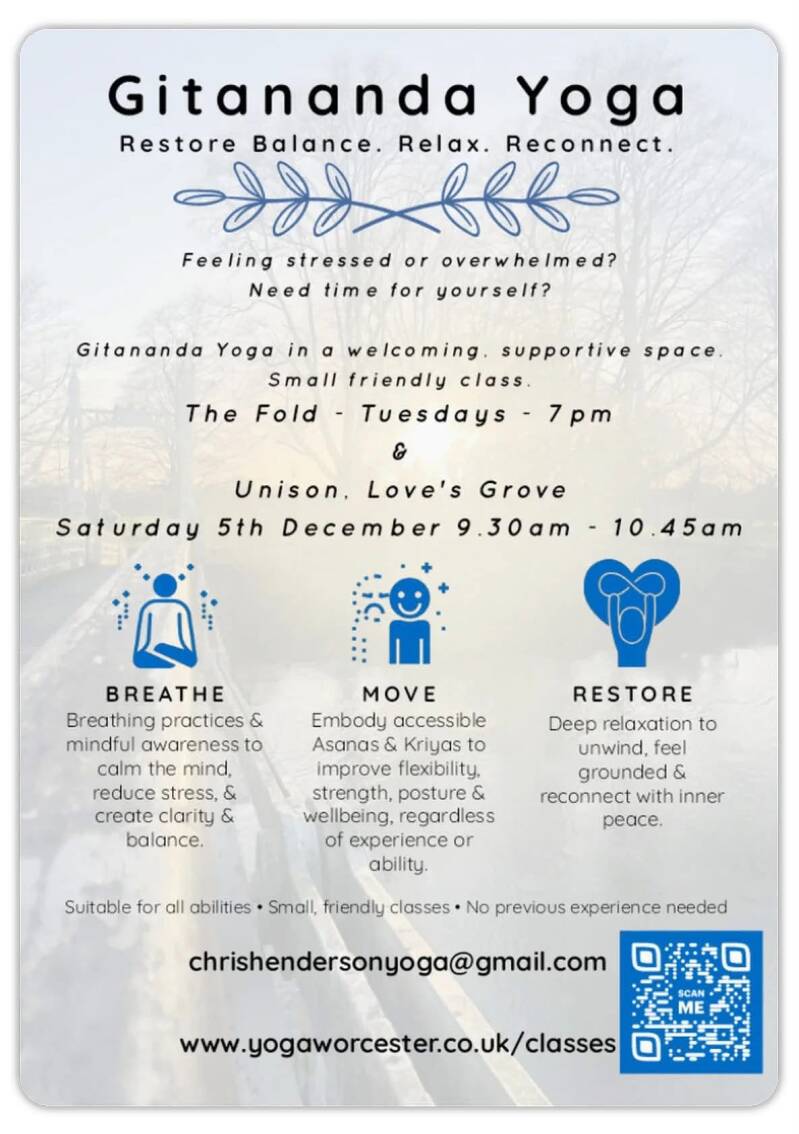
Gitananda Yoga offers a chance to slow down, breathe, reconnect with your body and create the conditions for calmer thinking and wiser choices.
Come and join me for at a Gitananda Yoga class in Worcester - Book a class
Add comment
Comments